Overview
This study asks a deceptively simple question: does it matter, for your wellbeing, how rich and varied the natural sounds around you are? We know that natural soundscapes generally improve mood and reduce stress. But very little research has isolated the role of acoustic biodiversity specifically. Does richness and variety in a natural soundscape amplify its restorative effects, or does any amount of nature sound produce the same result?
Bird species were chosen as the primary proxy for nature sounds in this study. Birdsong is measurable, ecologically meaningful, and the most extensively studied component of natural soundscapes in the psychoacoustic literature. The number of bird species present directly reflects the broader health and richness of an acoustic environment.
To test this, we designed a laboratory experiment that manipulates both the visual environment participants perceive and the species richness of the soundscape they hear, allowing us to disentangle auditory from visual effects and identify exactly what drives psychological restoration.
Collaboration: This study was conducted in collaboration with Whitney Fleming (Research Fellow, Bangor University).
Background and Theory
Two influential theories inform this study. Attention Restoration Theory (ART) proposes that natural environments restore directed attention by providing "soft fascination": effortless engagement that allows depleted attentional resources to recover. Natural soundscapes, with their pattern and variety, may do exactly this.
Stress Recovery Theory (SRT) takes a more physiological perspective, suggesting that exposure to natural stimuli triggers a rapid stress recovery response, reducing cortisol and activating parasympathetic nervous system activity.
Both theories predict that natural sounds should be restorative. But neither specifies what level of ecological richness is optimal, or whether perceived diversity (how many species a listener can distinguish) correlates with actual diversity. This study begins to address those gaps.
Study Design
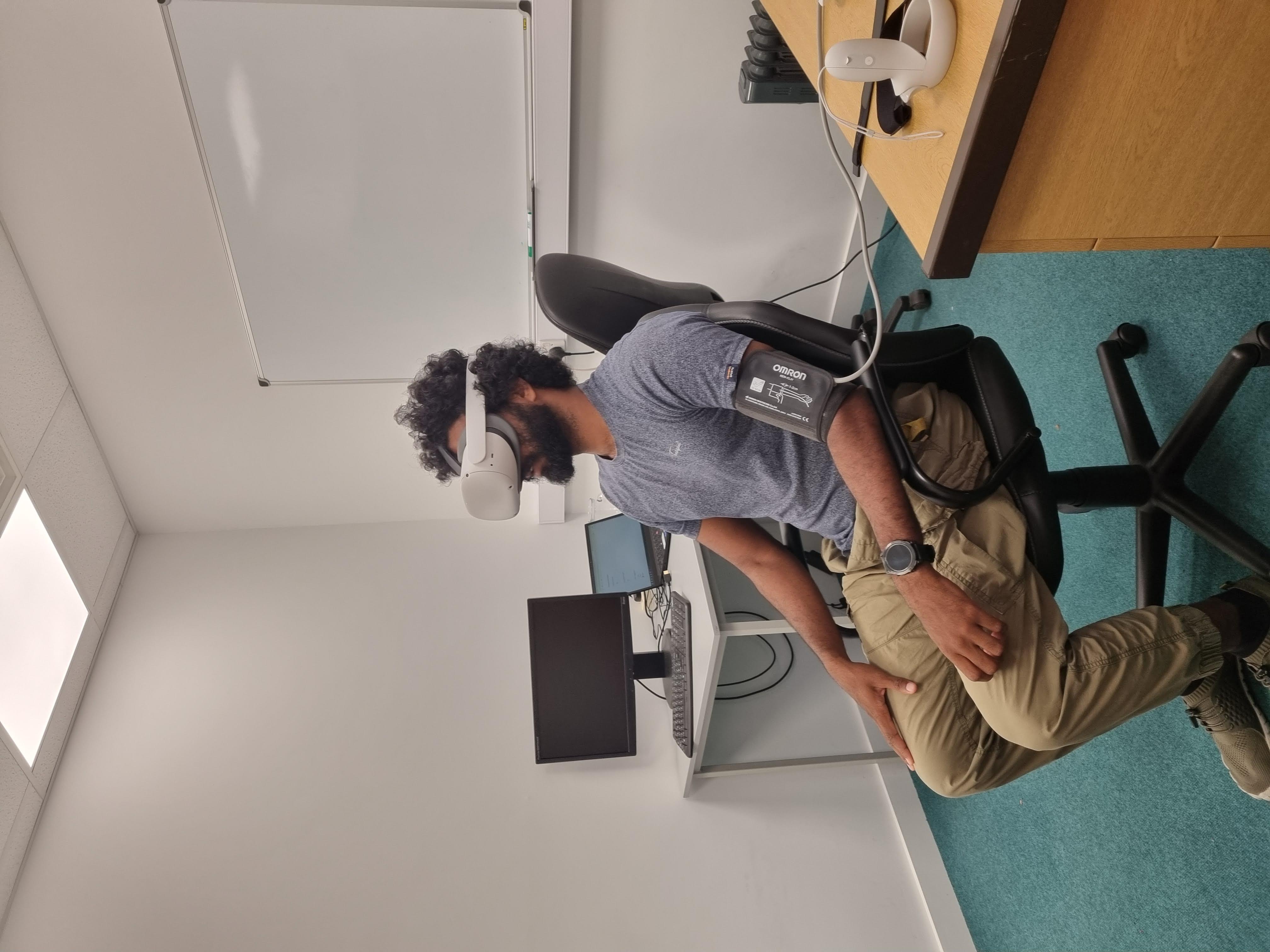
The study uses a within-subjects factorial design, combining three visual conditions with three soundscape richness levels, producing nine experimental conditions. Each participant experienced all conditions across sessions.
Visual Conditions
- No visual: Blank, turned-off VR headset — sound only, no visual stimulus
- Urban visual: A 360-degree urban environment delivered via VR headset
- Rural visual: A 360-degree natural/rural environment delivered via VR headset
Soundscape Conditions
- Low richness: 2 bird species
- Medium richness: 7 bird species
- High richness: 15 bird species
Soundscapes were created from recordings of North Wales bird species, carefully normalised and mixed to ensure the only variable between conditions was species number rather than overall loudness or temporal density.
Following each condition, participants took part in a brief semi-structured interview to explore their subjective experience in their own words.
| Parameter | Detail |
|---|---|
| Design | Within-subjects factorial (3 visual × 3 soundscape) |
| Sample | N = 180 participants |
| Setting | University laboratory |
| VR equipment | 360-degree video via VR headset |
| Soundscape species | 2 / 7 / 15 North Wales bird species |
| Qualitative method | Semi-structured interview (3 questions per condition) |
| Analysis approach | Reflexive Thematic Analysis (Braun and Clarke, 2019) |
What We Measured
Rather than relying solely on standardised questionnaires, this study centred the participant's own experience through qualitative interview. Three questions guided each post-condition conversation:
- How, if at all, did what you just heard (and saw) contribute to your sense of wellbeing?
- Did the experience bring to mind any memories or associations?
- Was there anything about the experience you found unpleasant or distracting?
Interview responses are being analysed using Reflexive Thematic Analysis, a qualitative methodology that generates themes from the data rather than imposing a predetermined coding framework. This allows themes to emerge from participants' actual language and meaning-making rather than our assumptions.
A cognitive measure was also administered after each soundscape exposure to capture attentional effects.
Status
Data collection for Study 1 is complete. All 180 participants have been seen, and interview recordings have been transcribed. The analysis pipeline is now under development, working through the thematic analysis stages: familiarisation, initial coding, theme generation and reporting. My analytical focus for this study is the Reflexive Thematic Analysis of the qualitative interview data.
Findings will be submitted for publication in a peer-reviewed journal on completion of the analysis. This page will be updated with a summary of findings once available.
This study was approved by the Bangor University College of Science and Engineering Ethics Committee. All data were collected and are stored in accordance with UK GDPR and the British Psychological Society Code of Ethics and Conduct. Participants provided informed consent and were debriefed on completion. No personally identifiable participant data are published on this page.