Overview
Studies 1 and 2 both took place in the laboratory, using recorded soundscapes delivered through headphones or speakers. Study 3 moves outside, into a real natural environment where participants hear the actual soundscape of a botanic garden in Bangor, Wales.
The central question is about attention. When you sit in a green space, do you naturally direct your attention towards the birdsong, or towards passing cars, distant voices and other human sounds? And does it matter which you attend to?
This study tests whether a brief, structured directed listening intervention asking participants to focus on natural sounds specifically, produces greater psychological benefit than free attention or attention directed towards anthropogenic noise. If it does, this has practical implications for how nature-based wellbeing interventions can be designed and delivered.
Background
Attention Restoration Theory suggests that natural environments elicit involuntary attention, allowing directed (voluntary) attention to recover. But most tests of ART do not ask whether explicitly directing attention changes the experience. Some research in mindfulness and contemplative practice suggests that the quality of attention brought to an experience can profoundly shape its effects.
Nature-based mindfulness practices (such as forest bathing or mindful birdwatching) are increasingly popular, but the evidence base for their specific mechanisms is thin. This study provides one of the first randomised tests of whether directed attention to natural versus anthropogenic sounds within the same acoustic environment produces different wellbeing outcomes.
The Setting
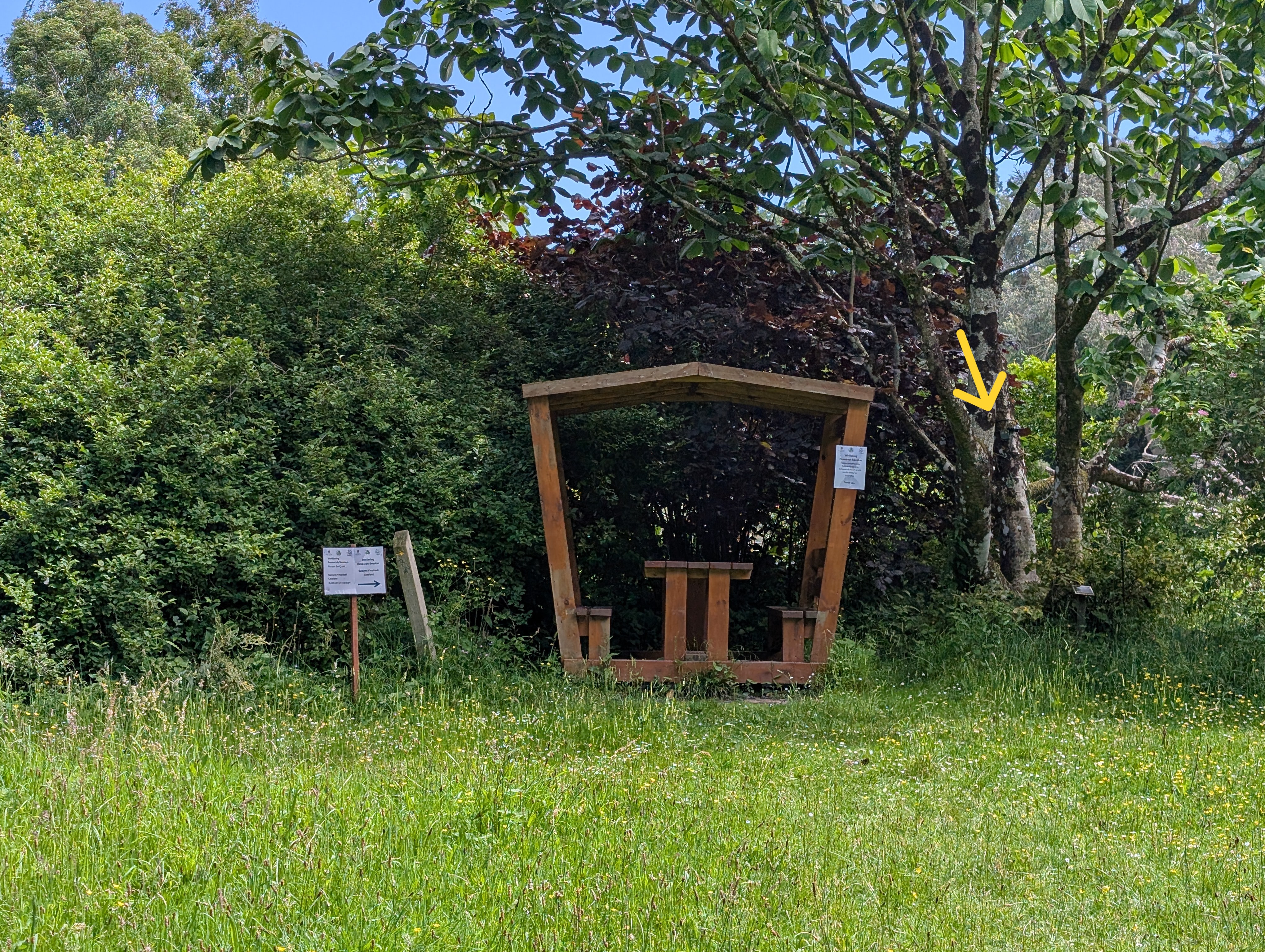
All sessions take place at Treborth Botanic Garden, on the Menai Strait near Bangor. Treborth is a working botanic garden with woodland, meadow and wetland habitats, and supports a diverse bird community throughout the year. It is publicly accessible, situated within the University estate, and offers a realistic urban-adjacent green space representative of the kinds of environments most people can access.
Participants are seated at a fixed, sheltered outdoor location within the garden for the 15-minute intervention. Passive acoustic monitoring is conducted simultaneously to characterise the soundscape each participant actually hears.
This study is part of a broader initiative treating Bangor as a city of wellbeing — using the city's natural and green spaces as active research environments.
Study Design
The study uses a three-arm parallel randomised design, with participants assigned to one condition only. This between-subjects approach avoids carry-over effects from switching attention strategies.
| Parameter | Detail |
|---|---|
| Design | Three-arm randomised (between-subjects) |
| Target sample | N = 105 (35 per condition) — data collection complete |
| Setting | Treborth Botanic Garden, Bangor |
| Intervention duration | 15 minutes directed listening |
| Session duration | Approximately 60 minutes total |
The Three Conditions
- Condition A (Natural focus): Participants are asked to direct their attention specifically to natural sounds, particularly birdsong, during the 15-minute period
- Condition B (Urban focus): Participants are asked to direct their attention to anthropogenic sounds (traffic, human voices, machinery) during the same period
- Condition C (Free attention): Participants sit outdoors for 15 minutes with no instructions about where to direct their attention, serving as a control
What We Measure
Measures are taken before and after the 15-minute intervention, allowing change scores to be calculated:
Psychological Measures (pre and post)
- Mood (POMS-SF): Profile of Mood States short form, capturing tension, depression, anger, vigour, fatigue and confusion
- State anxiety (STAI-State): Validated measure of momentary anxiety
- Attentional control (Necker Cube): A perceptual measure of voluntary attentional switching
- Executive control (Trail Making Test A and B): Timed task measuring processing speed and cognitive flexibility
Post-intervention Measures
- Perceived restorativeness (PRSS-SF): How restorative participants found the experience
- Nature connectedness (CNS): Trait-level connection to the natural world
- Perceived bird species richness: How many bird species participants thought they heard
- Demographics: Age, gender, education, time spent outdoors habitually
Qualitative Component
After completing the questionnaires, participants are invited to respond to two open-ended audio-recorded questions about their experience. These responses will be analysed using Reflexive Thematic Analysis alongside the quantitative data.
Passive acoustic monitoring data collected during the session will allow us to link participants' perceived bird diversity with the actual acoustic biodiversity present.
Status
Data collection for Study 3 is complete. A total of 105 participants took part across three groups (35 per group), at Treborth Botanic Garden, Bangor.
This study was conducted in collaboration with Percy Joyce (MSc Res Student), whose project within the study focused on knowledge and engagement with natural soundscapes. My analytical focus for this study is on emotions, perception and cognition based on mindful engagement with natural sounds.
Analysis is now underway. Results will be submitted for publication on completion.
This study has been approved by the Bangor University College of Science and Engineering Ethics Committee. All data will be collected and stored in accordance with UK GDPR and the British Psychological Society Code of Ethics and Conduct. Participants will provide informed written consent before taking part and will be fully debriefed on completion. Audio interview recordings will be transcribed, pseudonymised and stored securely. No identifiable data will be published.